The data your AI needs, maintained by the people who know it
The context only your business teams can provide
What agents consume at inference time
Cross-table mapping rules, business-defined labels and thresholds, lookup references that connect datasets, and structured decision inputs that tell an agent how to interpret and act on data. With them, an agent reasons from your rules.
What models consume for training and evaluation
Threshold definitions, scoring weights, simulation parameters, calibration values and reference hierarchies, maintained as tables rather than assumptions buried in a notebook. With them, models train on current inputs.
Maintained where AI already reads
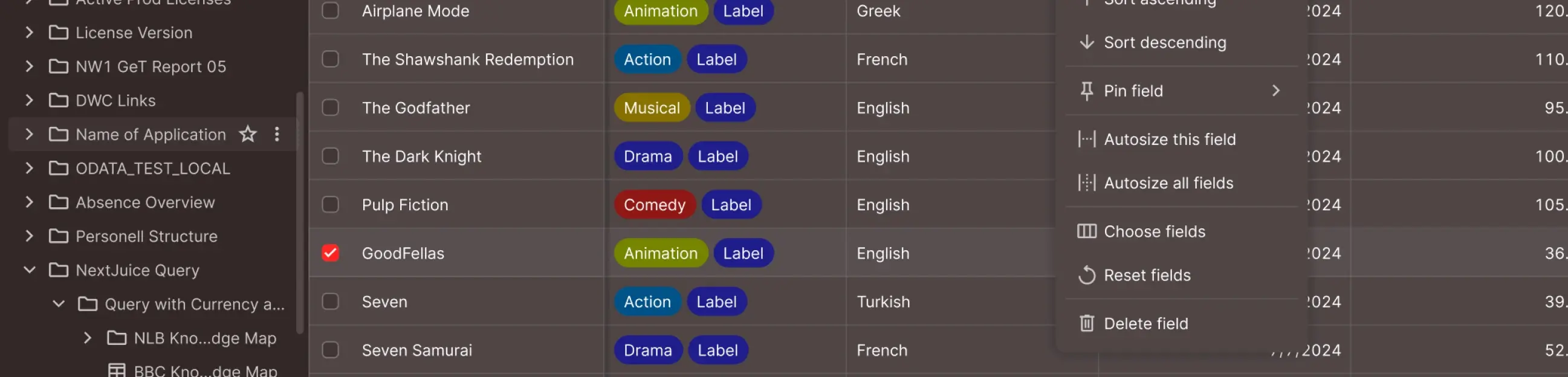
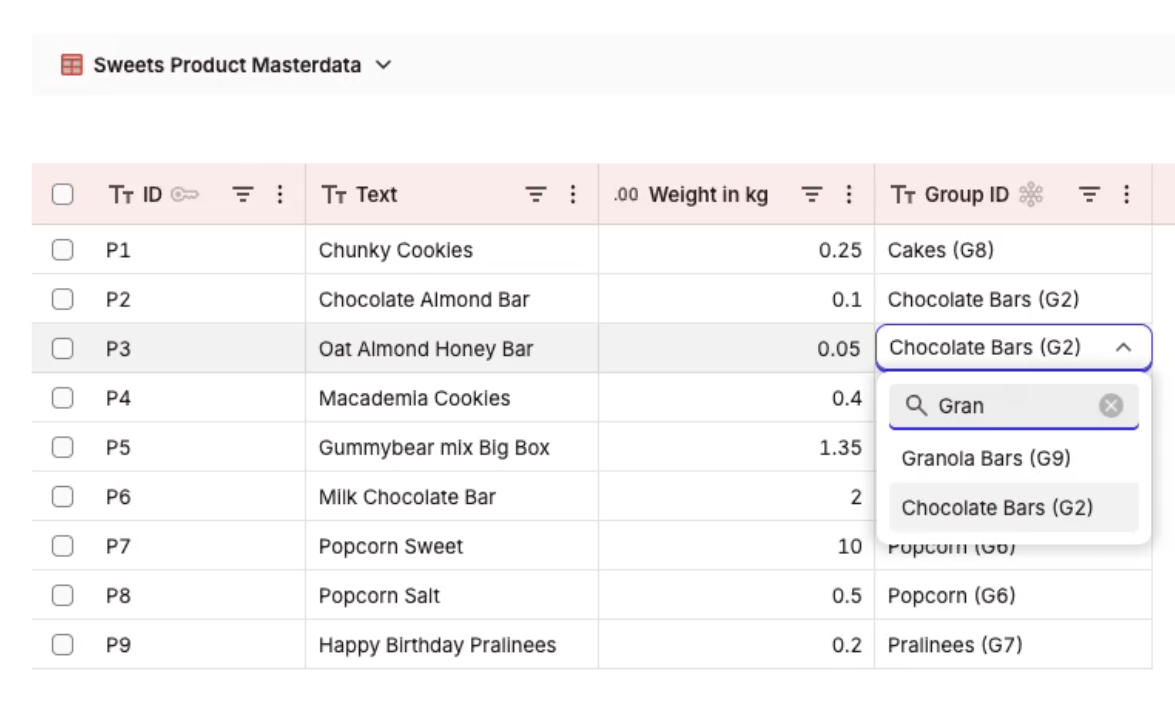
The context tables live in SAP Business Data Cloud, Databricks or PostgreSQL, next to the data they describe. A business user maintains them in the grid or a form, with value help against your master data, and the change is available to every model and dashboard at once. The master data can live in the same platform or in another connected one. What the grid and the forms look like: Built for business teams.
Trusted by design

Validated at entry
Checked against your master data and your rules before it is written, so a model trains only on values that passed the check.
Authorized down to the row
Roles scoped to folders and row-level rules decide who may maintain which context, the same way they decide it for every other table.
On the record
Who changed which value, and when, sits in the audit log inside your platform, so a model's inputs can be traced to a person and a date.
Platform-resident
The tables live where your models read, in place and as the only copy, and a change is visible at once.
Intelligent assistance, on the way
Talk to AI to edit your data
Coming Soon
AI is designed to assist with data maintenance through natural-language prompts: finding records, updating values and applying rule-based mass changes across many rows, with confirmation before every change and safe rollback at any point.
Talk to AI to create your data entry app
Coming Soon
AI is designed to assist across the lifecycle of an app: generating validation logic, creating tables and configurations, assembling a complete application. Every proposed object is reviewed and approved before it goes live.
A governed gateway for AI agents
Coming Soon
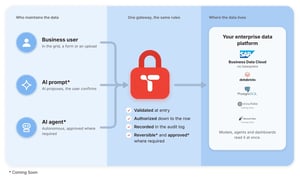
As organizations deploy agents that read and write data, the question becomes how an agent writes to the platform safely. NextTables is designed to serve as that gateway: agent-driven updates follow the same validation, authorization and audit log as a person's, and where governance requires it they wait for a human to approve.Same rules as a person
An agent's write goes through the same validation at entry and the same roles and row-level rules a human user is subject to.
Human in the loop where it matters
Which agent actions pass automatically and which need a person to review and confirm is a decision your team makes, per action.
On the record
Agent-driven changes land in the audit log like every other change, so an agent becomes a traceable channel for data maintenance.
Frequently asked questions
The context data AI depends on, still waiting for an owner end to end: semantic mapping tables for agents, classification and labeling tables for models, entity resolution references, threshold and rule tables, and the metadata that grounds a prompt.
Everything on this page except the two assistance items and the agent gateway is how NextTables works today, and the value for AI comes from data that is maintained, validated and on the record.
In your enterprise data platform, in the schema your administrator scoped. NextTables keeps configuration metadata only, so models and agents read the platform itself.
They are designed so that AI proposes and the user confirms, every time, with rollback of any change.
They are on the product roadmap and marked as such wherever they appear. Release notes and product updates go out by email; sign up on the product updates page.
Bring the table your model is waiting for
Half an hour on the mappings, thresholds and references your AI initiative still keeps in a spreadsheet. Or take the deck to the team first.